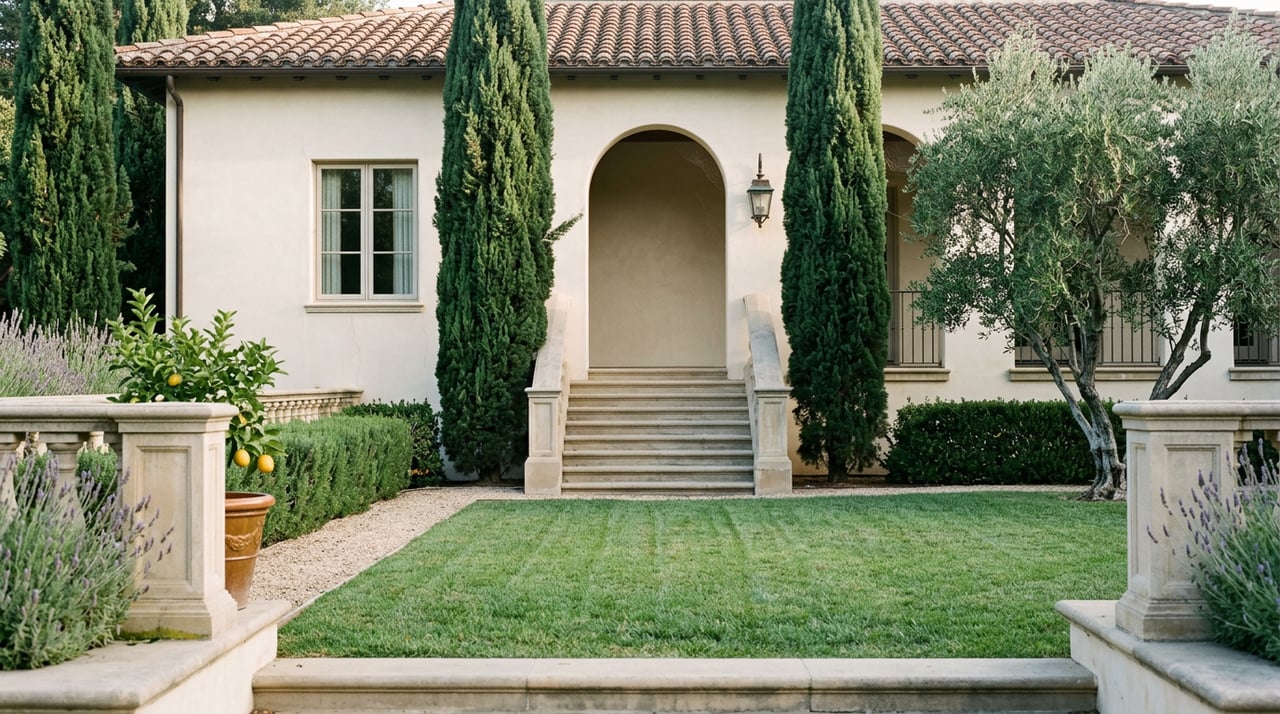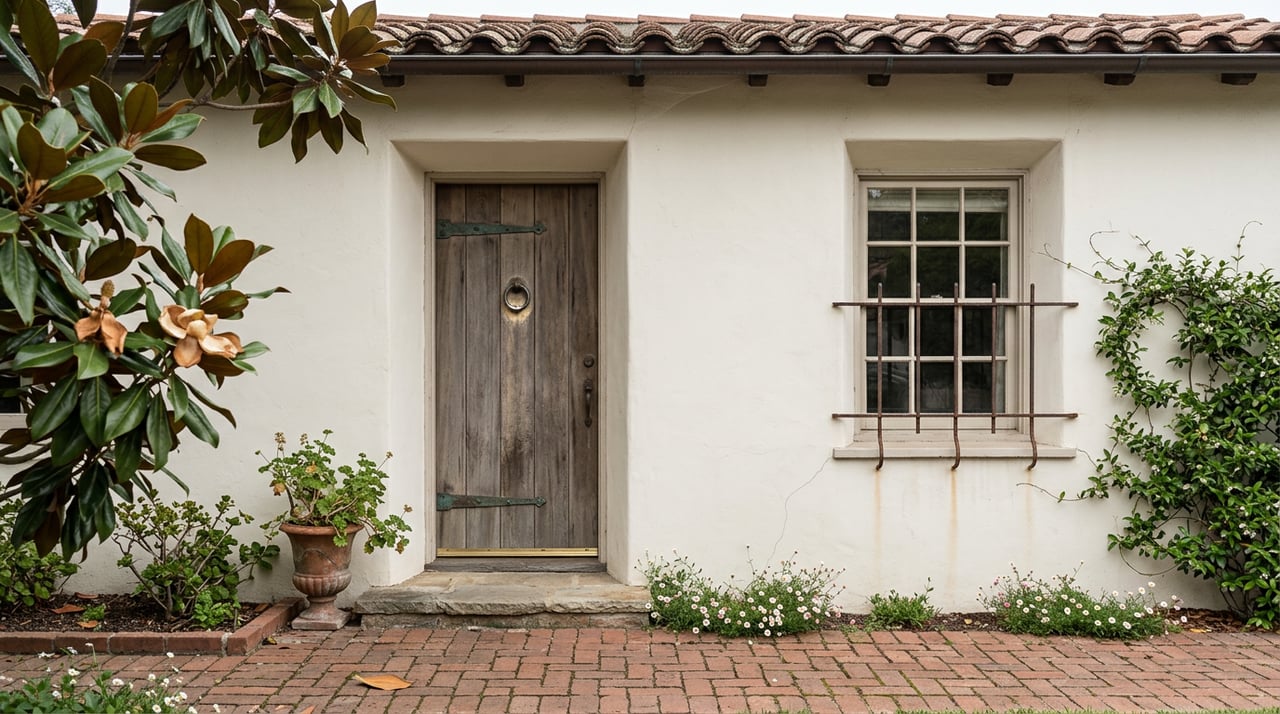
Two nearly identical 1920s Spanish Revival cottages sit three blocks apart in San Roque. Same square footage, same red tile roof, same designation as a City Structure of Merit. One owner pays a property tax bill that is roughly half what a comparable non-historic home would owe. The other pays close to full freight, despite living under the exact same preservation restrictions.
The difference has nothing to do with the house. It has to do with the calendar. Santa Barbara's Mills Act program, the state-authorized tax incentive that has quietly shaped ownership of the city's historic housing stock since the city joined the program in 2009, does not reward old architecture. It rewards recent purchase dates. Understanding why is the difference between treating a Mills Act listing as a marketing line and treating it as the financial instrument it actually is.
The Math Runs on Proposition 13, Not on the House
Here is the mechanism most listing descriptions skip. A Mills Act contract does not simply knock a flat percentage off whatever tax bill a homeowner already has. The city recalculates the property's assessed value using an income-based formula tied to the property's restricted use, and that new number replaces the standard market-value assessment for the life of the contract.
For someone who just bought the house at current market price, that recalculated Mills Act value almost always lands well below the fresh purchase-price assessment. The city's own program materials put the typical result at a 40 to 60 percent reduction in property taxes over the ten-year contract term, and that gap is exactly why the program exists: to offset the real cost of restoring and maintaining an aging structure.
For someone who has owned the same house for fifteen or twenty years, the math runs the other way. Proposition 13 has already capped their assessed value at a fraction of today's market price, often lower than what the Mills Act formula would produce. The city states this plainly in its own application guidance: owners with comparatively low existing property taxes are unlikely to see any financial benefit from a Mills Act contract, because their existing Prop 13 basis is already below what the formula would generate.
| Recent buyer (purchased at current market value) | Longtime owner (Prop 13 basis, 10+ years) | |
|---|---|---|
| Starting assessment | Full purchase price | Capped, often well below market |
| Mills Act formula result | Typically lower than purchase-price assessment | Often higher than existing Prop 13 basis |
| Likely outcome | Real, material tax reduction | Little to no reduction, sometimes a wash |
This is why the same contract can be a genuine windfall for a buyer closing this year and a paperwork exercise for the seller who has held the property since the 1990s. If you are evaluating a Mills Act home, the seller's purchase date tells you more about your own future tax bill than the assessor's current number does.
What You Inherit When the Contract Comes With the House
A Mills Act contract does not expire at closing. It runs for a minimum ten-year term that renews automatically each year on its anniversary date, which means in practice the term never actually counts down to zero unless someone formally terminates it. When a designated property sells, the contract transfers with title, and the new owner is required to sign an agreement continuing the maintenance obligations.
That is a meaningful thing to underwrite before you write an offer. You are not just buying a house with nice tax math. You are stepping into a restoration and maintenance plan that the city will re-inspect roughly every five years, with compliance tied to actual receipts and permits, not good intentions.
The exit is not free either. If a homeowner wants out of a Mills Act contract before its term is up, cancellation requires a public hearing before the city and can trigger a penalty equal to 12.5 percent of the property's assessed market value. On a Santa Barbara historic home, that is not a rounding error. It is a number worth asking your agent to run before you assume you can simply walk away from the restrictions once you own the place.
There is an offsetting perk worth knowing about too. The city's Planning Division generally waives fees for administrative-level approvals on designated historic properties, which softens the cost of routine maintenance work that would otherwise require a paid permit review.
The Application Window Nobody Budgets For
If you are buying a historic property with the plan to apply for Mills Act designation yourself, rather than inheriting an existing contract, timing becomes its own kind of friction. The city only accepts applications between January 1 and June 30 each year, and it stops accepting them once the program hits its citywide annual revenue loss cap of $260,000, whichever comes first. Miss that window, or watch the cap fill before your application lands, and your file rolls into the following year's cycle automatically.
Even a clean, on-time application does not produce instant savings. Approved contracts begin on January 1 of the year after approval and recording with the County Recorder's Office. Close on a historic property in August with plans to apply, and you could be looking at close to a year and a half before the first reduced tax bill arrives, not the following spring.
For a buyer running numbers on carrying costs during a renovation, that lag matters. The tax relief that makes a Mills Act purchase pencil out is not available the moment you close. It shows up on a fixed calendar that has nothing to do with your escrow date.
Where This Actually Plays Out Across Santa Barbara
The program is not confined to one postcard block. Santa Barbara recognizes a mix of architectural styles across multiple neighborhoods under this framework, and the Historic Landmarks Commission reviews applications for all of them, from the downtown core to the residential foothills.
A 1920s Tudor Revival on Calle Mariposa sits in San Roque, one of the city's more residential, family-oriented neighborhoods, not the tourist-facing downtown corridor most people associate with historic preservation. An 1872 Italianate on Chapala Street, designed by Peter Barber, one of Santa Barbara's earliest working architects, anchors a very different part of the city's history near the downtown core. A Mission Revival home on Garden Street, designed by A. Page Brown in 1895, adds a third architectural voice to the mix.
The designation framework traces back to the city's 1959 creation of the El Pueblo Viejo historic district downtown, the original landmark district that established the review process still in use today. Countywide, roughly 250 properties carry some form of historic landmark recognition, and more than 150 of those have entered Mills Act contracts since the program's inception. That spread across styles and neighborhoods is exactly why a buyer needs a property-specific answer rather than a general assumption about what "historic" means for a tax bill.
A Short Checklist Before You Assume the Discount Applies to You
- Ask when the current owner purchased the property and whether an active Mills Act contract already exists
- Request a copy of the existing contract along with the most recent maintenance or restoration report, if one has been filed
- Confirm the contract's anniversary date, since the rolling renewal structure means the term rarely lines up with your closing date
- If you plan to apply fresh rather than inherit a contract, check the January through June application window against your closing timeline
- Ask your lender how the property's current or projected tax assessment factors into your loan qualification, since Mills Act savings can shift the math meaningfully after close
A Few Questions Worth Asking Directly
Does the tax break disappear if I resell the house? No. The contract transfers with the property, and the new owner signs an agreement to continue the existing maintenance obligations rather than starting from scratch.
Can I just cancel the contract if I do not want the restrictions? You can request cancellation, but it requires a public hearing and can carry a penalty of 12.5 percent of the property's assessed market value, so it is not a decision to make lightly after closing.
Does every older home in Santa Barbara qualify? No. Eligibility is limited to properties formally designated as City Landmarks, Structures of Merit, or contributing structures within a recognized historic district, and the property must be free of unpermitted construction or unresolved tax issues before the city will consider an application.
If you are weighing a historic purchase in San Roque, the Riviera, downtown, or anywhere else in Santa Barbara where a Mills Act contract might be attached to the title, the numbers on the listing sheet only tell half the story. The other half depends on a purchase date, a contract anniversary, and a calendar most buyers never think to check until it is too late to plan around it.
Kendrick Guehr has spent over a decade working transactions across Santa Barbara's historic inventory and can walk you through what a specific Mills Act contract actually means for your carrying costs before you write an offer. Work With Kendrick to get the real math before you fall for the marketing line.